Sanyasi Chess Phenomenon: The Legacy of India's Sacred Board Game
Introduction to the Sanyasi Chess Phenomenon
The Sanyasi Chess Phenomenon stands as one of India’s most cherished traditional board games, steeped in centuries of history, spirituality, and strategic brilliance. Unlike mainstream international chess, this indigenous variant hails from the rural heartlands of India, particularly Uttar Pradesh, Bihar, and West Bengal, where it was played by wandering ascetics (sanyasis) as both a pastime and a metaphor for life’s journey. What makes the Sanyasi Chess Phenomenon truly unique is its blend of strategic gameplay, spiritual symbolism, and cultural relevance that has endured through colonial rule, modernization, and the digital age.
For generations, the Sanyasi Chess Phenomenon has been more than just a game—it is a living tradition, passed down from guru to disciple, from elder to youth, in village squares, ashrams, and community gatherings. The game’s name derives from the sanyasis who popularized it, using simple materials like chiseled stones for pieces and drawn lines on mud for boards, making it accessible to all regardless of social status or economic means. In contemporary India, the Sanyasi Chess Phenomenon has experienced a resurgence, with cultural enthusiasts and gaming historians working to preserve its rules and legacy amid the rise of digital entertainment.
✨ Key Insight: The Sanyasi Chess Phenomenon differs from standard chess in its spiritual core—each piece represents a stage of spiritual evolution, and the objective is not just to "defeat" the opponent but to achieve a state of balance, mirroring the sanyasi’s pursuit of moksha (liberation).
While international chess focuses on conquest and checkmate, the Sanyasi Chess Phenomenon emphasizes patience, foresight, and harmony with the opponent. This philosophical underpinning has made it a symbol of India’s rich intellectual heritage, transcending mere entertainment to become a tool for teaching life lessons, critical thinking, and ethical decision-making. In rural India, it is common to see elders using the Sanyasi Chess Phenomenon to impart wisdom to young minds, drawing parallels between game moves and real-life challenges—whether in agriculture, business, or personal relationships.
History of the Sanyasi Chess Phenomenon 📜
Ancient Origins (1000–1500 CE)
The roots of the Sanyasi Chess Phenomenon can be traced back to the post-Gupta period of Indian history, a time when ascetic movements flourished across the subcontinent. While exact historical records are scarce—owing to the game’s oral tradition and rural origins—archaeological findings from sites in Bihar and Odisha suggest that early versions of the game were played by Jain and Buddhist monks as early as the 11th century CE. These monks, like the sanyasis of later eras, used the game as a meditative practice, combining mental stimulation with spiritual reflection.
Unlike the Persian-influenced chaturanga (the ancestor of modern chess), the Sanyasi Chess Phenomenon developed independently in eastern and northern India, with rules tailored to the ascetic lifestyle. Early references to the game appear in regional folk literature, such as the Maithili poems of Vidyapati (14th century), which mention "sanyasi pat" (ascetic board) as a pastime for wandering mendicants. These texts describe a game played on a 9x9 board—larger than the standard 8x8 chessboard—with pieces representing elements of nature and spiritual concepts rather than royal figures.
Medieval Evolution (1500–1800 CE)
During the Mughal era, the Sanyasi Chess Phenomenon adapted to coexist with Persian-influenced chess variants, absorbing some elements while retaining its core identity. The game became particularly popular among the sanyasi orders of Bengal, who used it to pass time during their travels and to teach strategic thinking to their disciples. Colonial records from the 18th century note that British administrators in Bengal observed "holy men playing a curious board game" in village markets and ashrams.
A key development during this period was the standardization of the game’s rules across regional sanyasi networks. Whereas earlier versions varied widely by locality, itinerant ascetics created a unified set of rules to ensure consistency when playing with fellow sanyasis from different regions. This standardization helped the Sanyasi Chess Phenomenon spread beyond its eastern Indian heartland to parts of Punjab, Rajasthan, and even Nepal.
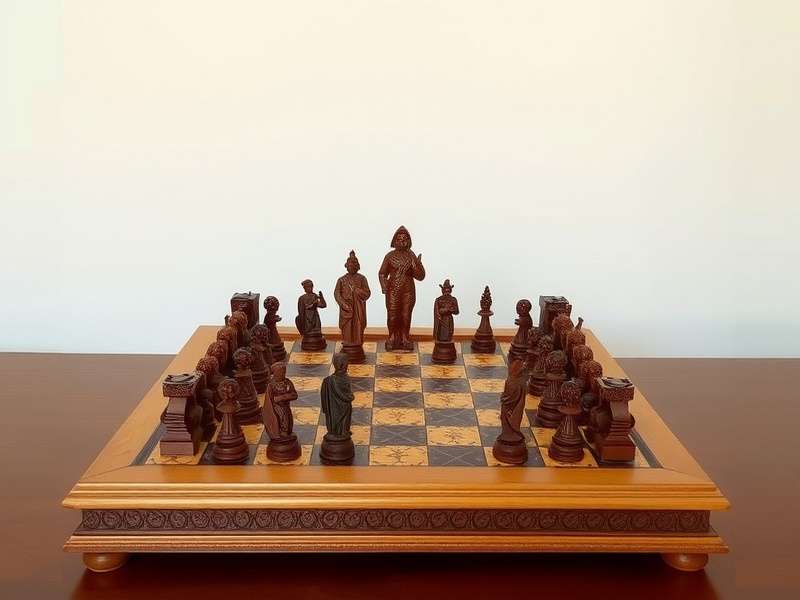
Fig 1: Replica of an 18th-century Sanyasi Chess board from a village in Bihar, made from teakwood and natural dyes.
Colonial Era and Resistance (1800–1947)
The British colonial period brought both challenges and unexpected opportunities for the Sanyasi Chess Phenomenon. On one hand, colonial education policies prioritized Western games and pastimes, leading to a decline in the game’s popularity among urban elites. On the other hand, rural communities and sanyasi orders embraced the game as a symbol of cultural resistance, using it to preserve Indian identity amid colonial influence.
The Sanyasi Rebellion (1763–1800) further cemented the game’s association with resistance and resilience. Rebellious sanyasis used the game to communicate strategies and pass messages, with board positions encoding secret information about meeting points and attack plans. This historical link between the Sanyasi Chess Phenomenon and anti-colonial resistance made it a symbol of national pride in the early 20th century, as the Indian independence movement gained momentum.
Mahatma Gandhi, himself a proponent of traditional Indian games, referenced the Sanyasi Chess Phenomenon in his writings, praising its emphasis on non-violence and mental discipline. He noted that unlike Western games focused on victory, the Sanyasi Chess Phenomenon taught players to "compete with respect and collaborate with dignity"—values central to his philosophy of satyagraha (non-violent resistance).
Post-Independence Revival (1947–2000)
After India’s independence in 1947, the Sanyasi Chess Phenomenon faced new challenges as modernization and urbanization transformed rural life. Many young Indians moved to cities for employment, leaving behind traditional games in favor of cricket, football, and later, video games. However, efforts by cultural organizations and rural elders kept the game alive in villages across Uttar Pradesh, Bihar, and West Bengal.
In the 1980s and 1990s, state governments in eastern India began recognizing the Sanyasi Chess Phenomenon as part of their cultural heritage, organizing regional tournaments to promote the game. These tournaments, often held during village fairs (melas), attracted participants of all ages and helped revive interest in the game among younger generations. Local NGOs also started documenting the game’s rules and history, fearing that oral traditions might be lost as older players passed away.
Rules and Gameplay of the Sanyasi Chess Phenomenon ♟️
Board and Pieces
The Sanyasi Chess Phenomenon is played on a 9x9 square board, known as the "tirtha" (pilgrimage site) in regional dialects. Unlike standard chess, the board has no alternating colors; instead, lines are drawn in a grid pattern on a flat surface (traditionally mud, wood, or cloth). The board is divided into three vertical sections (representing the three gunas or qualities of nature in Hindu philosophy: sattva, rajas, tamas) and three horizontal sections (representing the three stages of life: brahmacharya, grihastha, sanyasa).
Each player controls 18 pieces, categorized into five types based on spiritual and natural elements:
- 🌀 Atman (Soul): 1 piece, the central figure (equivalent to the king in chess). The objective is to protect the Atman and guide it to the "moksha square" (center of the board) rather than capturing the opponent’s Atman.
- 🌿 Sadhak (Seeker): 4 pieces, representing the seeker of truth. These move one square in any direction and are the most versatile early-game pieces.
- 🔥 Tapasvi (Ascetic): 4 pieces, representing those who practice austerity. These move two squares straight or one square diagonally, symbolizing the balance between discipline and flexibility.
- 🌊 Jal (Water): 4 pieces, representing the life-giving element. These move any number of squares horizontally or vertically, like rooks in standard chess.
- 🌞 Agni (Fire): 4 pieces, representing transformation. These move any number of squares diagonally, like bishops in standard chess.
- 🕉️ Dharma (Duty): 1 piece, a special piece that can move to any square once per game, representing the performance of one’s duty without attachment.
Traditionally, pieces are made from natural materials: white or light-colored stones for one player (representing purity) and dark stones or seeds for the other (representing the material world). In modern tournaments, wooden pieces with traditional carvings are used, often depicting ascetic figures and natural elements.
Objective of the Game
The fundamental difference between the Sanyasi Chess Phenomenon and standard chess lies in its objective. Instead of checkmating the opponent’s king, the goal is to:
- Guide your Atman (Soul) to the central square (moksha) of the board, OR
- Force the opponent to abandon their spiritual path by capturing all their Sadhak pieces, OR
- Create a "circle of peace" by surrounding the opponent’s Atman with your pieces without capturing it, symbolizing enlightenment over conquest.
This objective reflects the core philosophy of sanyasi life: liberation (moksha) is achieved through self-realization, not domination of others. Even if a player’s Atman is cornered, the game is not lost unless they cannot make a move that aligns with "dharma" (ethical play)—a unique rule that discourages aggressive or unethical tactics.
Gameplay Mechanics
The game begins with both players placing their pieces in predetermined positions on the board:
• Atman: Center of the back row
• Dharma: To the right of the Atman
• Jal: Corners of the back row
• Agni: Diagonally adjacent to the Atman
• Tapasvi: Second row, middle four squares
• Sadhak: Third row, all nine squares (though only four are used—one in each corner and one in the center)
Players take turns moving one piece at a time, following the movement rules for each piece type. Unlike standard chess, there is no castling, en passant, or promotion—rules that reflect the game’s emphasis on simplicity and spiritual focus. A key rule unique to the Sanyasi Chess Phenomenon is the "vrata" (vow) rule: a player may skip their turn to "strengthen" one piece, allowing it to move an extra square in their next turn. This rule rewards patience and strategic sacrifice, core values in ascetic philosophy.
Capturing pieces follows standard chess rules (moving to a square occupied by an opponent’s piece), but players are discouraged from excessive capturing—traditional players believe that capturing more than half of the opponent’s pieces leads to a "dharma deficit," making it harder to reach the moksha square. This cultural norm ensures that games remain balanced and respectful, even in competitive settings.
Winning Conditions in Detail
To win the Sanyasi Chess Phenomenon, a player must achieve one of three conditions, each with its own spiritual significance:
1. Moksha Victory: The Atman reaches the central square (moksha) after completing a "pilgrimage" of at least five moves across the board, symbolizing the soul’s journey to liberation.
2. Dharma Victory: The opponent has no Sadhak pieces left, meaning they can no longer seek truth—this victory requires ethical play and cannot be achieved through excessive capturing.
3. Shanti Victory (Peace Victory): The opponent’s Atman is surrounded by your pieces (at least eight pieces in adjacent squares) with no escape, symbolizing the triumph of peace over conflict.
In traditional play, a Moksha Victory is considered the most honorable, followed by a Shanti Victory, then a Dharma Victory. Tournaments often award additional points for Moksha Victories to encourage players to embrace the game’s spiritual core.
Regional Variations of the Sanyasi Chess Phenomenon 🗺️
Bengali Sanyasi Chess (Bangla Sanyasi Shatranj)
In West Bengal and Bangladesh, the Sanyasi Chess Phenomenon is known as "Bangla Sanyasi Shatranj" and features unique rules that reflect Bengali cultural traditions. The most notable difference is the inclusion of a "Durga piece" (representing the goddess Durga) that can capture any opponent’s piece once per game, symbolizing divine protection. The board in this variant is often decorated with paisley motifs (kantha work) and the central moksha square is marked with the Om symbol (ॐ).
Bengali Sanyasi Chess is traditionally played during Durga Puja, with village tournaments drawing large crowds. The game is seen as a way to honor both the goddess Durga and the ascetic traditions of Bengal’s Baul and Fakir communities. In Kolkata, urban adaptations of the game have emerged, with coffee shops and cultural centers hosting casual games for young professionals interested in traditional Indian games.
Maithili Sanyasi Chess (Mithila Pat)
In the Mithila region (Bihar and Nepal), the Sanyasi Chess Phenomenon is called "Mithila Pat" and is deeply intertwined with Madhubani art and culture. The board is often painted with Madhubani motifs depicting nature, deities, and ascetic figures, making each board a work of art. The Mithila variant adds a "Ganga piece" (representing the Ganges river) that can move along the board’s edges (symbolizing the river’s flow) and cannot be captured, reflecting the sacred status of the Ganges in Hinduism.
Mithila Pat is played during festivals like Chhath Puja and Holi, with families gathering to play and pass down stories about the game’s origins. Elders in Mithila believe that playing the game during Chhath Puja brings blessings from the sun god, Surya, and ensures prosperity for the household.
Awadhi Sanyasi Chess (Awadhi Sanyasi Chak)
In Uttar Pradesh’s Awadh region (Lucknow, Ayodhya), the Sanyasi Chess Phenomenon is known as "Awadhi Sanyasi Chak" and incorporates elements of Mughal culture into its rules. The Dharma piece is renamed "Nizam" (ruler) and can move like a knight in standard chess, reflecting the region’s Mughal heritage. The board in this variant is often made from ivory (in traditional versions) or polished wood (in modern versions), with intricate carvings of Mughal architecture.
Awadhi Sanyasi Chess was historically played by both Hindu ascetics and Muslim sufis in Awadh, symbolizing religious harmony. Even today, interfaith tournaments are held in Lucknow during Eid and Diwali, promoting communal unity through the game.
Modern Urban Variations
In India’s major cities (Mumbai, Delhi, Bangalore), the Sanyasi Chess Phenomenon has adapted to urban lifestyles, with shorter game formats and digital versions. Urban variants often use a smaller 7x7 board and reduce the number of pieces to 12 per player, making games faster and more suitable for casual play in cafes and co-working spaces.
Digital adaptations of the Sanyasi Chess Phenomenon have also emerged, with mobile apps and online platforms allowing players to compete with others across India. These digital versions retain the core rules and philosophy of the traditional game while adding features like tutorials, leaderboards, and virtual ashrams where players can learn from experienced masters.
Cultural Impact of the Sanyasi Chess Phenomenon 🎭
Spiritual and Philosophical Significance
The Sanyasi Chess Phenomenon is more than a game—it is a spiritual practice that embodies the core tenets of Hindu, Jain, and Buddhist philosophy. Each aspect of the game reflects key concepts from Indian spirituality:
- The 9x9 board represents the 81 tattvas (elements of reality) in Samkhya philosophy, a school of Indian thought focused on self-realization.
- The three vertical sections symbolize the three gunas (sattva: purity, rajas: passion, tamas: inertia) that govern human behavior and the natural world.
- The movement rules for each piece reflect the path to moksha: the Sadhak (seeker) moves slowly but steadily, the Tapasvi (ascetic) balances discipline and flexibility, and the Atman (soul) requires protection and guidance to reach liberation.
In ashrams across India, the Sanyasi Chess Phenomenon is used as a teaching tool to explain complex philosophical concepts to disciples. For example, the vrata (vow) rule is used to teach the value of sacrifice and patience, while the Shanti Victory illustrates the importance of resolving conflicts without violence.
Social Impact and Community Building
In rural India, the Sanyasi Chess Phenomenon serves as a social glue, bringing together people of different castes, ages, and backgrounds. Village tournaments (known as "sanyasi pat melas") are major community events, featuring not just games but also folk music, dance, and food stalls. These melas provide a platform for social interaction and cultural exchange, breaking down barriers between different groups.
The game is also used as a tool for youth development in rural areas. NGOs like the Sanyasi Chess Academy (based in Varanasi) use the game to teach critical thinking, decision-making, and ethical behavior to at-risk youth. Studies have shown that children who play the Sanyasi Chess Phenomenon regularly exhibit higher levels of patience, empathy, and problem-solving skills compared to their peers.
Art and Literature
The Sanyasi Chess Phenomenon has inspired a rich body of Indian art and literature, particularly in eastern India. Madhubani paintings from Mithila often depict scenes from the game, with ascetics playing on ornate boards surrounded by deities and nature motifs. In Bengali literature, authors like Rabindranath Tagore and Bankim Chandra Chattopadhyay have referenced the game in their works, using it as a metaphor for life’s journey and the pursuit of truth.
Contemporary Indian filmmakers have also explored the game’s cultural significance. The 2019 Bengali film "Sanyasi Pat" tells the story of a young boy from a rural village who learns the game from a wandering ascetic, using it to overcome personal challenges and unite his community. The film won several awards at regional film festivals and helped raise awareness about the Sanyasi Chess Phenomenon among urban audiences.
Economic Impact
The revival of the Sanyasi Chess Phenomenon has created economic opportunities in rural India, particularly for artisans who make traditional game boards and pieces. In Bihar’s Madhubani district, women’s self-help groups produce hand-painted Sanyasi Chess boards using Madhubani art, selling them to tourists and cultural organizations across India and abroad. These products provide a sustainable source of income for rural women, empowering them economically while preserving traditional art forms.
Tourism is another area where the Sanyasi Chess Phenomenon has had a positive impact. Rural homestays in Uttar Pradesh and Bihar now offer Sanyasi Chess workshops and tournaments as part of cultural tourism packages, attracting domestic and international tourists interested in traditional Indian games. This eco-tourism model benefits local communities by creating jobs and promoting sustainable development.
The Sanyasi Chess Phenomenon in the Modern Era 🌐
Revival and Preservation Efforts
In the 21st century, the Sanyasi Chess Phenomenon has experienced a remarkable revival, driven by cultural enthusiasts, historians, and government initiatives. The Government of India’s Ministry of Culture has recognized the game as an intangible cultural heritage, providing funding for documentation, preservation, and promotion. The Indira Gandhi National Centre for the Arts (IGNCA) in New Delhi has created a digital archive of the game’s rules, variations, and historical artifacts, ensuring that future generations can access this cultural treasure.
Non-profit organizations like the Traditional Games of India Trust have played a key role in reviving the Sanyasi Chess Phenomenon, organizing national tournaments and school programs to introduce the game to young people. These programs often pair elderly masters with schoolchildren, creating an intergenerational exchange of knowledge and skills.
Digital Adaptation and Global Reach
The digital age has brought new opportunities for the Sanyasi Chess Phenomenon to reach a global audience. Mobile apps like "Sanyasi Chess Pro" and "Moksha Chess" have been downloaded over 500,000 times, making the game accessible to players across India and abroad. These apps feature tutorials, multiplayer modes, and virtual tournaments, allowing players to learn and compete from anywhere in the world.
Online communities dedicated to the Sanyasi Chess Phenomenon have emerged on social media platforms like Facebook and Instagram, with players sharing strategies, historical information, and photos of traditional game boards. These communities have created a global network of enthusiasts, from India to the United States, Europe, and Australia, who are passionate about preserving and promoting this unique Indian game.
Competitive Gaming and Tournaments
The Sanyasi Chess Phenomenon has evolved into a competitive sport, with national and international tournaments attracting players of all ages and skill levels. The All India Sanyasi Chess Championship, first held in 2010, is now an annual event hosted in different Indian cities, with participants from 28 states and several neighboring countries (Nepal, Bangladesh, Sri Lanka). The championship features separate categories for children, youth, adults, and seniors, ensuring that players of all ages can participate.
International recognition has also come to the Sanyasi Chess Phenomenon, with the game being featured at the World Traditional Games Festival in South Korea and the Asian Traditional Sports Festival in China. These events have helped position the game as a symbol of India’s rich cultural heritage on the global stage.
Challenges and Future Outlook
Despite its revival, the Sanyasi Chess Phenomenon faces several challenges in the modern era. The rise of digital entertainment and Western games continues to attract young people away from traditional board games, making it difficult to sustain interest among the younger generation. Additionally, the game’s oral tradition means that many regional variations and rules are at risk of being lost as elderly masters pass away.
To address these challenges, stakeholders are focusing on innovation while preserving the game’s core philosophy. Hybrid models that combine traditional board play with digital elements (like augmented reality tutorials) are being developed to make the game more engaging for young people. Educational institutions are also incorporating the Sanyasi Chess Phenomenon into their curricula, teaching it as part of ethics, philosophy, and critical thinking courses.
The future of the Sanyasi Chess Phenomenon looks promising, with growing interest from both within India and abroad. As more people recognize the game’s cultural and educational value, it is poised to become a global ambassador for Indian traditional games, promoting peace, patience, and strategic thinking in an increasingly fast-paced world.
🌟 Future Vision: By 2030, proponents of the Sanyasi Chess Phenomenon aim to have the game included in the Asian Games and other international sporting events, further elevating its status as a symbol of Indian cultural heritage and promoting its philosophy of harmony and balance worldwide.
Recommended by Daman Games 🎮
At Daman Games, we celebrate India's rich gaming heritage, and the Sanyasi Chess Phenomenon stands out as a testament to our country's intellectual and spiritual legacy. We proudly feature the Sanyasi Chess Phenomenon in our collection of traditional Indian games, offering digital and physical versions for enthusiasts of all ages. Whether you're a seasoned player or new to the game, Daman Games provides resources, tutorials, and a community of fellow enthusiasts to help you explore the depth and beauty of this iconic Indian game. Join us in preserving and promoting the Sanyasi Chess Phenomenon for future generations!